Why didn't I think of this before? When I don't make my own yogurt - and kudos to anyone who always makes their own yogurt - I buy Wallaby Organic vanilla yogurt. It's delicious, but it's sweet. Very sweet just like most any yogurt other than plain. I had a brilliant idea the other day - I bought one container of vanilla and one of plain and mixed them together. Voila! Instantly lowered the sugar content. So am I late to the party? Do other people regularly do this?
I've discussed low-fat vs. full-fat and asked you to read labels and make the best decision for you. Many low-fat products add numerous unnecessary ingredients. I'm very comfortable buying low-fat Wallaby vanilla yogurt because there's not lots of added crap... other than sugar that is.
Action Item: Check the sugar content on your yogurt. Unless you enjoy plain yogurt, and hopefully you do, then your favorite is likely high in sugar. Look for lower-sugar content yogurt or mix yours with equal amounts of plain yogurt. This can be done with non-dairy yogurts as well. Besides consuming less sugar, you may just learn to love the taste of plain yogurt (or plain yogurt sweetened with fresh fruit!) I'm getting there, but still working on loving plain yogurt's tart taste.
For Further Reading: Low-fat, Lite and Nonfat and Sweet Snack
Showing posts with label sugar. Show all posts
Wednesday, July 30, 2014
Monday, June 23, 2014
Watermelon Slushy
Who's up for a delicious summer slushy with no added sweeteners? After drinking delicious, fresh watermelon juice on a hot day in Santa Fe, I decided to make some juice myself. Then after accidentally pushing the pitcher of juice to the back of the refrigerator, we ended up with a fantastic slushy!
Ingredient: watermelon
Directions: Cut the water melon as usual. Just be sure to cut it over a pan so you can catch all the liquid. Eat the water melon as usual but save some to put in a blender. Also cut very close to the rind and get every bit of the watermelon. Then squeeze the rind to get every last drop of juice. Blend it all until smooth. Put it in the freezer just until it's slushy. Voila. Yummy and refreshing!
On a related note, if you are committing to a healthier you, this week's mini-pledge may be one of the most difficult yet as you cut refined sweeteners from your diet. As I've said once or twice before, sugar is everywhere. I'm going to jump in this week and participate as well, because my "moderation" has increased a bit. In my mind, this is a great way to get back to basics and eat your fruits and vegetables. By cutting out added sugars, you're going to eat clean, healthy whole foods.
Here's this week's challenge from 100 Days of Real Food. Click the link below for lots of great information from that blog.
Ingredient: watermelon
Directions: Cut the water melon as usual. Just be sure to cut it over a pan so you can catch all the liquid. Eat the water melon as usual but save some to put in a blender. Also cut very close to the rind and get every bit of the watermelon. Then squeeze the rind to get every last drop of juice. Blend it all until smooth. Put it in the freezer just until it's slushy. Voila. Yummy and refreshing!
| I quickly snapped this picture before my son emptied the glass. |
On a related note, if you are committing to a healthier you, this week's mini-pledge may be one of the most difficult yet as you cut refined sweeteners from your diet. As I've said once or twice before, sugar is everywhere. I'm going to jump in this week and participate as well, because my "moderation" has increased a bit. In my mind, this is a great way to get back to basics and eat your fruits and vegetables. By cutting out added sugars, you're going to eat clean, healthy whole foods.
Here's this week's challenge from 100 Days of Real Food. Click the link below for lots of great information from that blog.
No refined or artificial sweeteners including (but not limited to): white sugar, brown sugar, raw sugar, sucanat, splenda, stevia, agave, corn syrup, high-fructose corn syrup, brown rice syrup, and cane juice. Foods and beverages can only be sweetened with a moderate amount of honey or maple syrup.
Action Item: Keep checking labels. Sugar might be hiding where you least expect it!
Monday, June 2, 2014
Low-fat, Lite and Nonfat
If you are committing to a healthier you, it's week six!Week 6: No low-fat, lite or nonfat food products – Do not eat any food products that are labeled as “low-fat,” “lite,” “light,” “reduced fat,” or “nonfat.”
I went through a no-fat phase many years ago and am sorry that I did. Can't even imagine the chemicals that I put in my body through non-fat cookies and other lite products. I had some health issues at that time, and I'm pretty sure I now know why! We still eat an organic low-fat yogurt and it has very few ingredients. Still working on what is right for our diet. Once again, read labels and make the best decision you can at the time.
Action Item: Check the labels of any low-fat, fat-free or light products in your home. Are they high in sugar and sodium, and is the ingredient list a mile long? Probably so. Stick with foods with few (and natural) ingredients.
For Further Reading: Low-fat Diet: Why Fat Free Isn't Trouble Free, Why You Need to Avoid Low-fat Milk and Cheese and Why You Should Be Wary of Lowfat and Light Foods
Thursday, May 15, 2014
Hungry or Thirsty?
When you feel a little hungry and lacking energy, do you reach for a bite to eat or a glass of water? Chances are you reach for food when your body might just be telling you it's thirsty.
So your stomach might grumble or you've already eaten and still don't feel satisfied, then it's probably water your body is after. Livestrong.com recommends:
Try not to depend on the noises and feelings your stomach always makes. The next time you feel hunger pangs, drink an 8 oz. glass of water. It might take up to 15 minutes for your hypothalamus to send a signal letting your nervous system know that the body was merely thirsty and that the thirst has been satisfied. If after that time, you still feel hungry, then eat. When you try this method every time you think your stomach feels empty, you will be able to better determine the difference between being hungry and being thirsty.
Staying hydrated can help you take in less calories. From care2.com:
If you avoid dehydration, you can avoid overeating. When you start to hydrate by drinking enough water, then your appetite goes down because you’re actually fulfilling what your body needs—which is water. And that’s also a very powerful way to lose weight, but also, in a sense, the hydration makes everything, including your brain, work a lot better.
On a personal note, since I stopped drinking diet sodas (and added more hydrating drinks) four years ago, maintaining my weight has been the easiest since I started worrying about it in college!
Action Item: Drink real beverages today. Especially water!
For Further Reading: Sugary Drinks
On a personal note, since I stopped drinking diet sodas (and added more hydrating drinks) four years ago, maintaining my weight has been the easiest since I started worrying about it in college!
Action Item: Drink real beverages today. Especially water!
For Further Reading: Sugary Drinks
Friday, May 9, 2014
Fed Up
Have you heard about this documentary that opens today? The synopsis from the Fed Up website states "Everything we’ve been told about food and exercise for the past 30 years is dead wrong. FED UP is the film the food industry doesn’t want you to see. From Katie Couric, Laurie David (Oscar winning producer of AN INCONVENIENT TRUTH) and director Stephanie Soechtig, FED UP will change the way you eat forever."
Here's a link to the documentary website and you can watch the trailer there too.
I haven't seen the movie, don't know if I'll agree with it 100%, but from what I read I absolutely agree that added sugar is the reason for the majority of health problems in children and adults. In my opinion, exercise is absolutely important, but what you eat is equally important.
In this fantastic article, Fed Up: Cook or Be Cooked, by Dr. Mark Hyman, he says he was in medical school in the 80s and there was not a case of a child with Type 2 Diabetes. I asked my husband who was in med school in the 90s. Same thing. So basically since around 2000, children have started being diagnosed with Type 2 Diabetes (formerly called Adult Onset Diabetes) because of their diets. How are we setting our children up for a healthy, happy, productive life if we are allowing this to happen?
Why do we eat high-sugar foods?
- Some people know better, but choose to make poor decisions.
- Some people trust food company claims ("healthy", "natural", etc.) It's unfortunate that we can't trust the claims!
- Consumers are bombarded with commercials and advertising and think they must have these exciting new products.
- Cravings from already consuming too many high-sugar foods.
- Addiction?
- Many, many people unfortunately live in food deserts where healthy fresh produce is not available. What's available are fast food restaurants and convenient stores that sell cheap "food" that looks like a better deal to people trying to stretch their dollar.
- And there are probably many people who buy prepared food just out of convenience.
- Some people never learned how to cook and don't know where to start.
- Added sugar is in almost everything!
- The reasons are numerous, and we should focus on HOW can this be changed?
What can you do? Start with you and your family if you haven't already. First, significantly cut added sugars from your diet. If you are participating in the Real Food Challenge to cut out processed foods, you may be working on that this week with your beverages.
Next, stop buying processed foods with zero nutritional value. It's not just added sugar that makes these foods so unhealthy, but also sodium, preservatives, and artificial colors. You can speak with your money. If companies start to lose money, they'll change their products. It may take time, but it can work.
Also, educate your family members and friends. Set a good example with your healthy eating and healthy lifestyle. If the topic comes up in conversation, explain why you choose to eat fruits and vegetables over sodas and packets of 100-calorie cookies.
Teach your children the importance of healthy food and teach them how to cook or just let them cook with you. This is on top of my to-do list this summer with our son.
Keep in mind that there are people who think they are eating healthy by purchasing some of the products they do, because that's what marketing and advertising has led them to believe. Finds ways to educate others without preaching to them... take real foods to your children's school parties, and soccer games, invite friends to your house for dinner and serve delicious vegetables with a dessert of fruit, ask coworkers to pack a lunch and sit in the park on your lunch break! Be that person that chooses to make a change, slowly others will stand with you, but it may take time. REAL FOOD is awesome. It makes us feel good. It allows us to be who we want and do what we want to do. Be the crazy one out there promoting a healthy life... soon others will join you :)
Action Item(s): Watch the movie trailer. Take the mini-pledge to drink real beverages. Or take the Fed Up Challenge. If nothing else, PLEDGE to take care of your family members and ESPECIALLY your CHILDREN. Do not let them start their lives with preventable health problems. Teach them healthy eating habits starting today!
For Further Reading: Sugar, Come Out With Your Hands Up, Kids Eat Right, Kids Cook Monday
Labels:
diabetes,
documentary,
Fed Up,
processed foods,
sugar
Thursday, May 8, 2014
Are you Committing to a Healthier You?
Today, are you starting the week 2 mini-pledges for cutting processed foods from your diet?
Keep checking back this week for more tips (or research) on ways to accomplish this goal. And frequently visit the blog where I found this challenge, 100 Days of Real Food; here's the link for tips on this week's pledge, “Real” beverages.
Start today by:
Don’t drink your calories: Any form of liquid sugar calories is worse than solid food with sugar or flour. Think of it as mainlining sugar directly to your liver. It turns off a fat storage machine in your liver, leading to dreaded belly fat. You don’t feel full, so you eat more all day and you crave more sugar and carbs. It’s also the single biggest source of sugar calories in our diet. That includes sodas, juices other than green vegetable juice, sports drinks, sweetened teas or coffees. One 20-ounce soda has 15 teaspoons of sugar; Gatorade contains 14 teaspoons of the stuff in one bottle. One can of soda a day increases a kid’s chance of being obese by 60 percent and a woman’s chance of type 2 diabetes by 80 percent. Stay away!
Action Item: Take the week 2 mini-pledge today!
For Further Reading: Healthy Beverage Guidelines from the Harvard School of Public Health.
- If you don't know what I'm talking about, visit my page Commit to a Healthier You to find out more.
- If your answer is YES, then today is an exciting day because you are ready to start the 2nd mini-pledge called “Real” beverages – Beverages will be limited to coffee, tea, water, and milk (only naturally sweetened with a little honey or 100% pure maple syrup). One cup of juice will be allowed throughout the week, and wine (preferably red) will be allowed in moderation (an average of one drink per day).
- If no, what's stopping you? Perhaps you've already accomplished this goal, then good for you! If you're not sure you can or want to give up your sodas, give it a try. It's just one week! I can almost guarantee that you will see an increase in your energy and a decrease in your cravings. Dropping this bad habit can also save you money and cut way back on the number of plastic bottles that need to be made and recycled.
Keep checking back this week for more tips (or research) on ways to accomplish this goal. And frequently visit the blog where I found this challenge, 100 Days of Real Food; here's the link for tips on this week's pledge, “Real” beverages.
Start today by:
- Adding more water into your diet; put a little fruit in your water for a nice splash of taste!
- Sweetening your coffee with honey rather than table sugar.
- Eating grapes, an orange or other juicy fruit to quench your thirst. This will also help maintain your week 1 commitment of consuming more fruits and vegetables!
Don’t drink your calories: Any form of liquid sugar calories is worse than solid food with sugar or flour. Think of it as mainlining sugar directly to your liver. It turns off a fat storage machine in your liver, leading to dreaded belly fat. You don’t feel full, so you eat more all day and you crave more sugar and carbs. It’s also the single biggest source of sugar calories in our diet. That includes sodas, juices other than green vegetable juice, sports drinks, sweetened teas or coffees. One 20-ounce soda has 15 teaspoons of sugar; Gatorade contains 14 teaspoons of the stuff in one bottle. One can of soda a day increases a kid’s chance of being obese by 60 percent and a woman’s chance of type 2 diabetes by 80 percent. Stay away!
Action Item: Take the week 2 mini-pledge today!
For Further Reading: Healthy Beverage Guidelines from the Harvard School of Public Health.
Labels:
artificial sweetener,
change,
coffee,
juice,
milk,
mini-pledge,
processed foods,
real beverages,
sugar,
water,
wine
Saturday, May 3, 2014
INFOBite
Informative 2-minute video from Consumer Reports about Healthy Foods Gone Bad.
Some of their examples are pretty obvious, like hazelnut peanut butter; a healthy food is not still healthy when you add lots of sugar. Any food that needs a marketing plan or an eye-catching package design to draw your attention is probably not a good choice.
Eat whole foods.
Buy packaged products with limited ingredients.
Read. Labels.
Labels:
healthy,
healthy foods gone bad,
labels,
packaged,
sugar
Tuesday, April 8, 2014
Sweet Talk
I'm talking about sugar again today, but with more ways to help you cut back or make healthier choices. Perhaps you've tried cutting back by:
Huffington Post listed 10 Essential Rules to Healthy Eating and #8 is Ditch the Whites:
White Flour
The milling process strips the grains of most of their nutrition. The result: "White flour digests in your body rapidly, which makes blood sugar spike," says Foodist author Darya Pion Rose, PhD. (Cue the almost inevitable crash.) "It should be a supplement to your diet, not the main event." Try more-nutritious flours, like almond, coconut, and chickpea. One easy way to start: Substitute white whole wheat flour for 1/3 cup (or more) of the white flour in recipes.
White Sugar
Research suggests that sugar can be addictive. And it's a sneaky ingredient added to processed foods that don't even taste sweet, like bread and pasta sauce. Reach for organic honey or maple syrup instead; they're less refined and offer small amounts of antioxidants. (Still, aim for no more than 24 grams of added sugar per day.) Steer clear of foods with sugar listed among the first three ingredients -- and that includes agave nectar, evaporated cane juice, malt syrup, and anything ending in "-ose." ("There are 1,001 code names!" warns Rose.)
Here's a list of 30 code names for sugar from the Consumerist.
Remember you can always eat less! This is a maximum recommendation.
Action Item: This may be time consuming (but aren't you worth it?), but count the grams of sugar that you consume just for today. Check packaging or look up the food online with a quick search. Count all day or stop when you get to 25 grams and see how long it took you to get there! Hopefully it wasn't during breakfast.
For Further Reading: Plenty of links on this post today, so I won't add any more :)
- saying no to sodas
- refusing to eat or drink anything with high fructose corn syrup
- using honey to sweeten your coffee
- reading labels on everyday items
- opting for healthier snacks, such as fruit
These are all great ideas, but what else can you do as you continue on your journey toward cleaner eating?
Huffington Post listed 10 Essential Rules to Healthy Eating and #8 is Ditch the Whites:
White Flour
The milling process strips the grains of most of their nutrition. The result: "White flour digests in your body rapidly, which makes blood sugar spike," says Foodist author Darya Pion Rose, PhD. (Cue the almost inevitable crash.) "It should be a supplement to your diet, not the main event." Try more-nutritious flours, like almond, coconut, and chickpea. One easy way to start: Substitute white whole wheat flour for 1/3 cup (or more) of the white flour in recipes.
White Sugar
Research suggests that sugar can be addictive. And it's a sneaky ingredient added to processed foods that don't even taste sweet, like bread and pasta sauce. Reach for organic honey or maple syrup instead; they're less refined and offer small amounts of antioxidants. (Still, aim for no more than 24 grams of added sugar per day.) Steer clear of foods with sugar listed among the first three ingredients -- and that includes agave nectar, evaporated cane juice, malt syrup, and anything ending in "-ose." ("There are 1,001 code names!" warns Rose.)
Here's a list of 30 code names for sugar from the Consumerist.
But how and why?
Here is a great article from OneGreenPlanet to give you a little more info and help you get started. It's short and to the point, so please take a minute to read it. The article starts with this, "Linked to weight problems, joint problems, heart problems, bone problems, brain problems, and immunity problems — too much sugar is not just about cavities anymore."What's the most sugar you should eat per day?
CBS News reported that "The World Health Organization is dropping its sugar intake recommendations from 10 percent of your daily calorie intake to 5 percent. For an adult of a normal body mass index, that works out to about 6 teaspoons -- or 25 grams -- of sugar per day."Remember you can always eat less! This is a maximum recommendation.
Keep educating yourself.
We know how popular agave nectar became. I started using it to sweeten my coffee and yogurt and other recipes calling for sweetener. I continued reading about it and found conflicting information, so we stopped using it in January (see related post). A friend shared this article from The Oz Blog, and again it confirms the other not-so-good news about agave nectar.What can be used to sweeten my foods?
The more I read, the more I'm reminded that we don't need sweet foods! If most of the sweeteners are bad or contributing to health problems, then they shouldn't be part of our diets. Artificial sweeteners can not fuel our bodies. To sweeten foods naturally, honey and maple syrup are the best choices. Yes, you can use very small amounts of sugar or eat desserts and still be healthy, BUT you have to be honest with yourself about how much you are consuming.Action Item: This may be time consuming (but aren't you worth it?), but count the grams of sugar that you consume just for today. Check packaging or look up the food online with a quick search. Count all day or stop when you get to 25 grams and see how long it took you to get there! Hopefully it wasn't during breakfast.
For Further Reading: Plenty of links on this post today, so I won't add any more :)
Thursday, January 23, 2014
Keep Reading
I mentioned in a previous post about using agave nectar instead of table sugar, and I made a note to myself to discuss it later. After reading another negative article last night, now is the time. I've been using agave nectar for several months, and I had read both good and bad reviews about it. While researching this post, I'm still finding agave nectar on best and worst lists! Some articles say that Raw and Organic Agave Nectar is the way to go while others say not to use it at all. I'm seeing more negative info, so for the time being I'm putting only honey in my coffee until I take the time to check out other natural sweeteners. Honey and maple syrup (both preferably raw, organic or local) seem to still be good guys. Next I might check out Stevia, but there seems to be a lot of talk of the plant vs. the powder. That, my friends, is why we keep reading on this healthy-eating journey!
This is an important topic, but I will add that we shouldn't get too focused on specific sweeteners and forget that the goal is to cut back on all sugars in our diet.
While searching online I also found this chart which could help with baking while using different types of sweeteners.
Do you use natural sweeteners? If so, what's your favorite?
Action Item: Read more about natural sweeteners if you have questions then choose the best one(s) for you.
For Further Reading: Best and Worst Sweeteners to Have in Your Kitchen and Is Agave Bad For Your Health? and Top 5 Healthiest Natural Sweeteners and this is a good article, Sugar Wars. I've never read anything by this author before, but she seems knowledgeable and makes some great points in her summary at the end.
This is an important topic, but I will add that we shouldn't get too focused on specific sweeteners and forget that the goal is to cut back on all sugars in our diet.
While searching online I also found this chart which could help with baking while using different types of sweeteners.Do you use natural sweeteners? If so, what's your favorite?
Action Item: Read more about natural sweeteners if you have questions then choose the best one(s) for you.
For Further Reading: Best and Worst Sweeteners to Have in Your Kitchen and Is Agave Bad For Your Health? and Top 5 Healthiest Natural Sweeteners and this is a good article, Sugar Wars. I've never read anything by this author before, but she seems knowledgeable and makes some great points in her summary at the end.
Labels:
agave,
honey,
maple syrup,
natural,
natural sweetener,
sugar,
sweetener
Saturday, January 18, 2014
HFCS
If you're watching your sugar intake, take extra care to watch out for high-fructose corn syrup (HFCS). And if you're reading this and concerned about what you eat, you're probably already aware of high-fructose corn syrup. If not, read the links below or search for other articles for more information. Research has shown that HFCS is a huge contributor to obesity and various illnesses; especially because it comes in processed "foods." Here's an excerpt from an article by Dr. Mark Hyman, "The main reason you should give up high fructose corn syrup is that it's a big red flag for very poor quality food. If you see this ingredient on a label, I guarantee you the food is processed junk. So, if high fructose corn syrup is anywhere on the label, put it back on the shelf. You should never eat this food."
The problem I've encountered is that HFCS is EVERYWHERE. You know it's in soda, but it also likely in your ketchup, barbecue sauce, syrup, bread, yogurt, applesauce, peanut butter, salad dressing, crackers... you name it. Have I said this before - read the labels! Now most of you probably agree with me, but most of this "food" in the picture is not food. Though it is eaten regularly by many people and occasionally by a few people; it should not make up most of your caloric intake.
This is why we should try to stick with foods that are natural (in their natural state) or foods that have very few ingredients (ie. three to five). It's a challenge, but those foods are out there. In some stores, they stick all the healthy foods in one section which cracks me up and makes me sad for too many reasons to name.

These are two condiments that we like with no HFCS and low total sugar and/or sodium. Better yet, if you are efficient and good with time management and/or really want to save money and eat healthy, then try making your own ketchup or barbecue sauce. Looking for a yummy whole wheat cracker, try Triscuits Thin Crisps Original: they have only three ingredients!
Let me know your thoughts and if you have any great recipes for making these products or others on your own! Especially salad dressing, I need some good ones.
Action Item: Check your cabinets again. Are you eating HFCS that you don't know about?
For further reading: High Fructose Corn Syrup: Any Concerns? and The Not-so-sweet Truth About High Fructose Corn Syrup
The problem I've encountered is that HFCS is EVERYWHERE. You know it's in soda, but it also likely in your ketchup, barbecue sauce, syrup, bread, yogurt, applesauce, peanut butter, salad dressing, crackers... you name it. Have I said this before - read the labels! Now most of you probably agree with me, but most of this "food" in the picture is not food. Though it is eaten regularly by many people and occasionally by a few people; it should not make up most of your caloric intake.This is why we should try to stick with foods that are natural (in their natural state) or foods that have very few ingredients (ie. three to five). It's a challenge, but those foods are out there. In some stores, they stick all the healthy foods in one section which cracks me up and makes me sad for too many reasons to name.
These are two condiments that we like with no HFCS and low total sugar and/or sodium. Better yet, if you are efficient and good with time management and/or really want to save money and eat healthy, then try making your own ketchup or barbecue sauce. Looking for a yummy whole wheat cracker, try Triscuits Thin Crisps Original: they have only three ingredients!
Let me know your thoughts and if you have any great recipes for making these products or others on your own! Especially salad dressing, I need some good ones.
Action Item: Check your cabinets again. Are you eating HFCS that you don't know about?
For further reading: High Fructose Corn Syrup: Any Concerns? and The Not-so-sweet Truth About High Fructose Corn Syrup
Labels:
food labels,
HFCS,
high fructose corn syrup,
homemade,
poor food quality,
sugar
Sunday, January 5, 2014
Let's talk about sugar (again)
Cereal. It's good any time of day, but is yours good for you? Is it fueling your body? I do not buy any cereals that have more than 6 grams of sugar per serving. WebMD says that one teaspoon of granulated sure equals 4 grams of sugar. Go take a look at your cereal; does it have, let's say, 16 grams of sugar? That's like eating a serving of cereal (usually 3/4 cup) and pouring in 4 teaspoons of the white stuff! No one wants to do that.
I hate to ruin your day, but as you are cooking (because the people cooking are probably the ones mostly reading this) look at the sugar content of your ketchup, pasta sauce, bread everything! Suddenly, the "I don't eat much sugar" turns to "oh my, no wonder I'm sluggish/cranky/can't lose weight/etc."
There are obviously much better options for breakfast, but cereal is nice on a rushed morning or as a snack later in the day. If it's the right cereal full of whole grains, limited ingredients (that you can pronounce), and looks to be in a natural state (not funny shapes). This is a topic for another day, but try your cereal with unsweetened vanilla almond milk. Yum (and no sugar or dairy!)
Action item: Check the sugar content of your cereal. Do you need to shop for different cereal next time?
For further reading: Recommended grams of sugar per day
I hate to ruin your day, but as you are cooking (because the people cooking are probably the ones mostly reading this) look at the sugar content of your ketchup, pasta sauce, bread everything! Suddenly, the "I don't eat much sugar" turns to "oh my, no wonder I'm sluggish/cranky/can't lose weight/etc."There are obviously much better options for breakfast, but cereal is nice on a rushed morning or as a snack later in the day. If it's the right cereal full of whole grains, limited ingredients (that you can pronounce), and looks to be in a natural state (not funny shapes). This is a topic for another day, but try your cereal with unsweetened vanilla almond milk. Yum (and no sugar or dairy!)
Action item: Check the sugar content of your cereal. Do you need to shop for different cereal next time?
For further reading: Recommended grams of sugar per day
Wednesday, January 1, 2014
It's a new year
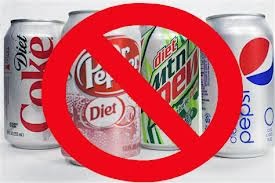
A new year, and a perfect time to put down that soda. Whether it's diet or regular, there is no place in a healthy diet for soda. I'm starting with an attitude, but this is an important topic. Most subjects, I will say "moderation" is the key. So, if you can drink one soda per week or only when you have an occasional pizza, then go for it (but still try to stop completely). Otherwise, stop drinking soda. There is so much research about artificial sweeteners. Google it. Regular and diet sodas are filled with artificial everything and do nothing to fuel your body or your brain. Nothing. They will probably get you out of your chair to go to the bathroom or cloud your thinking or cause stomach pain or rot your teeth ...Keep in mind, artificial sweeteners in limited amounts may be helpful for diabetics, but that is a discussion between people and their healthcare providers.
Come back tomorrow, I promise not to be as snooty.
Action item: Cut out sodas for one day. Continue one day at a time until they are out of your diet. Drink water. Glorious wonderful water that keeps you hydrated, keeps your skin glowing, keeps your body functioning properly, helps keep headaches away and it's free and easily accessible.
Futher reading: Things to Drink Besides Sodas
Subscribe to:
Posts (Atom)